
OSHA Sanitation Standards: Calculating Required Units for Active Job Sites
Learn how to accurately calculate portable toilet requirements for construction sites under OSHA standard 29 CFR 1926.51, ensuring regulatory compliance and worker safety.
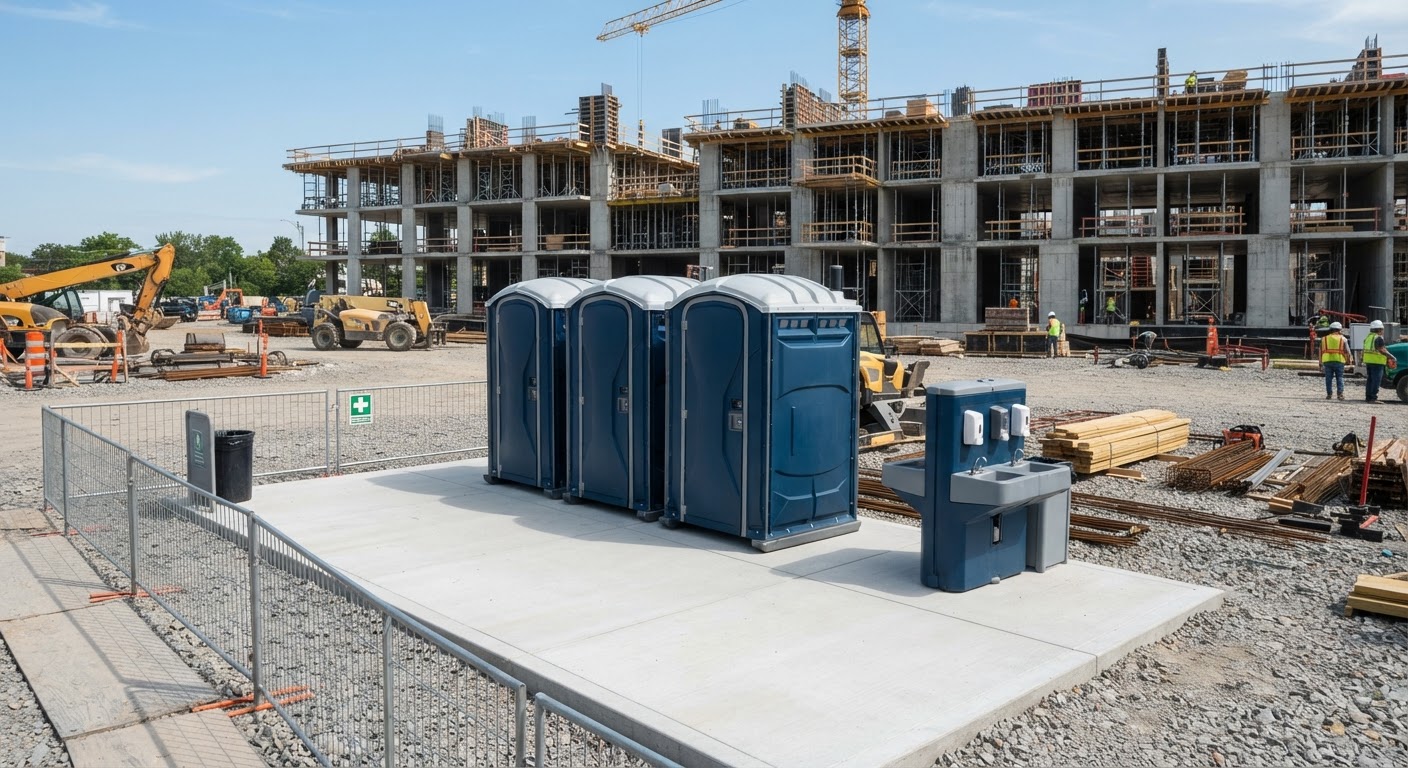
Understanding OSHA Regulations for Job Site Sanitation
Maintaining sanitary working conditions on an active construction site is not just a matter of worker comfort; it is a federal mandate enforced by the Occupational Safety and Health Administration (OSHA). Under 29 CFR 1926.51, employers must provide adequate, readily accessible toilet facilities for employees engaged in construction operations. Compliance with these standards prevents workplace health hazards, supports productivity, and shields project managers from costly violations and stop-work orders.
For contractors and site supervisors managing builds, understanding the baseline requirements set by OSHA is the critical first step in site logistics planning. Proper sanitation planning takes into account team size, gender distribution, shift lengths, and site geography to ensure every worker has reliable access to clean facilities.
The Core OSHA Ratio: Minimum Toilets Per Worker
OSHA sets strict minimum ratios for toilets on construction sites based on the total number of workers present during a single shift. While these numbers serve as a legal minimum, high-efficiency sites often exceed them to prevent queues and maintain project momentum.
- 20 or Fewer Workers: A minimum of 1 toilet facility is required.
- 20 to 199 Workers: A minimum of 1 toilet seat and 1 urinal per 40 workers.
- 200 or More Workers: A minimum of 1 toilet seat and 1 urinal per 50 workers.
It is important to remember that these ratios assume standard eight-hour work shifts with standard weekly servicing. If a project utilizes extended twelve-hour shifts or operates multiple consecutive shifts without scheduled cleaning between them, the baseline calculation must be adjusted upward to account for the increased usage volume.
ANSI/PSAI Standards vs. OSHA Minimums
While OSHA sets the enforceable legal floor, many commercial general contractors rely on the standards developed by the American National Standards Institute (ANSI) and the Portable Sanitation Association International (PSAI). These guidelines often recommend a higher density of units, generally suggesting one portable restroom per 10 workers for an eight-hour shift when units are serviced once weekly.
Adopting the ANSI/PSAI model helps avoid the common pitfalls of meeting only bare-minimum legal standards. When sites experience heavy physical labor, workers consume more fluids, leading to higher restroom usage. Exceeding minimum thresholds reduces wait times, keeps units cleaner between scheduled service visits, and supports overall site morale.
Factors That Alter Your Job Site Sanitation Formula
Calculating the exact number of units needed involves evaluating more than just raw headcount. Project managers must evaluate several operational variables before finalizing their equipment orders:
1. Shift Patterns and Multi-Shift Operations
If your job site runs day and night shifts, total daily usage doubles even if the headcount per shift remains constant. In these scenarios, you must either increase the total number of portable restrooms on-site or schedule bi-weekly or tri-weekly maintenance visits to refresh tanks and restock consumables.
2. Crew Fluctuations During Build Phases
Construction staffing rarely remains flat. A site may begin with a small excavation team of six workers, swell to fifty during framing, mechanical, and electrical phases, and taper down during interior finish work. Toilets should be ordered in phases that match the scheduled labor curve, preventing both undersupply during peak activity and overspending during low-occupancy stages.
3. Accessibility and Travel Distance
OSHA requires that toilet facilities be readily accessible. If a worker must spend ten minutes walking across an expansive commercial site, descending multiple flights of stairs, or waiting for a construction hoist just to reach a restroom, the site layout violates practical accessibility principles. On multi-story or geographically spread-out projects, units should be distributed across different levels or sectors rather than grouped entirely in one central bank.
4. Dedicated Facilities and Privacy
While OSHA allows shared facilities, many contractors choose to designate specific units for different subcontractors or provide dedicated facilities when mixed-gender crews are present. Providing well-marked, lockable facilities supports privacy and helps maintain cleaner individual units across the footprint.
Handwashing and Hygiene Requirements
Toilets are only half of the sanitation equation. OSHA mandates that employers provide adequate handwashing facilities in close proximity to toilet units. Hand hygiene stations must provide either running water with soap or appropriate sanitizing agents where tap water is infeasible.
In heavy construction environments where employees handle concrete, adhesives, solvents, or soil contaminants, thorough handwashing is a fundamental safety practice. Incorporating standalone, foot-pump-operated multi-station wash sinks equipped with soap and paper towel dispensers ensures crew members can thoroughly decontaminate before eating, drinking, or operating vehicles.
Servicing Frequency: The Hidden Variable
The standard industry ratio of portable toilets to workers assumes one complete pump-out, sanitization, and restock cycle per week. However, servicing frequency directly impacts how many units you legally need on site. Doubling your service schedule from once per week to twice per week effectively doubles the capacity of your existing units without consuming additional ground space.
For urban infill jobs, coastal developments, or tightly constrained job sites—such as those found throughout commercial and light-industrial corridors in El Segundo—physical footprint is often at a premium. When staging areas, material laydowns, and heavy machinery crowd the site, increasing maintenance frequency is an effective strategy to keep unit counts manageable while remaining compliant with waste volume regulations.
Site Placement Best Practices for Safety and Servicing
Determining the right number of units is only successful if those units remain functional and accessible. Proper placement ensures that both your crew and the sanitation provider can use and service the units safely:
- Level, Stable Ground: Restrooms must be placed on firm, flat surfaces to eliminate tip-over risks, particularly during coastal wind events.
- Service Vehicle Clearances: Service trucks require clear access within 15 to 25 feet of each unit to connect vacuum hoses safely. Restrooms blocked by pallets, aggregate piles, or parked machinery cannot be serviced.
- Well-Lit Areas: For projects with early-morning starts or late evening shifts, units should be located near temporary site lighting to prevent slip, trip, and fall hazards.
- High-Rise Logistics: For high-rise commercial structures, consider crane-liftable units or specialized rolling units that fit into construction elevators, bringing facilities directly to the active working floors.
Maintaining a Safe, Compliant Worksite
Proper job site sanitation directly influences worker health, reduces lost time from excessive travel, and keeps your project fully aligned with federal and local safety standards. Taking the time to calculate realistic requirements—accounting for site-specific logistics, shift structures, and regular servicing—keeps projects running smoothly from groundbreaking to final inspection.
Karnova Porta Potty Services supports active construction sites across El Segundo with compliant, well-maintained portable restrooms, high-capacity handwash stations, and reliable scheduled servicing tailored to your project schedule. Contact our local team today to calculate your site requirements and arrange seamless delivery.
Need help from Karnova Porta Potty Services?
Contact our team to discuss your service needs in El Segundo and surrounding service areas.